A Public Course Guide That Starts With Your Worst Shot
A public 18-hole course guide that answers one question per chapter, separates measured facts from teaching rules, and tells you what to practise first.
- Published September 17, 2026
- 456 words
- 2 min read
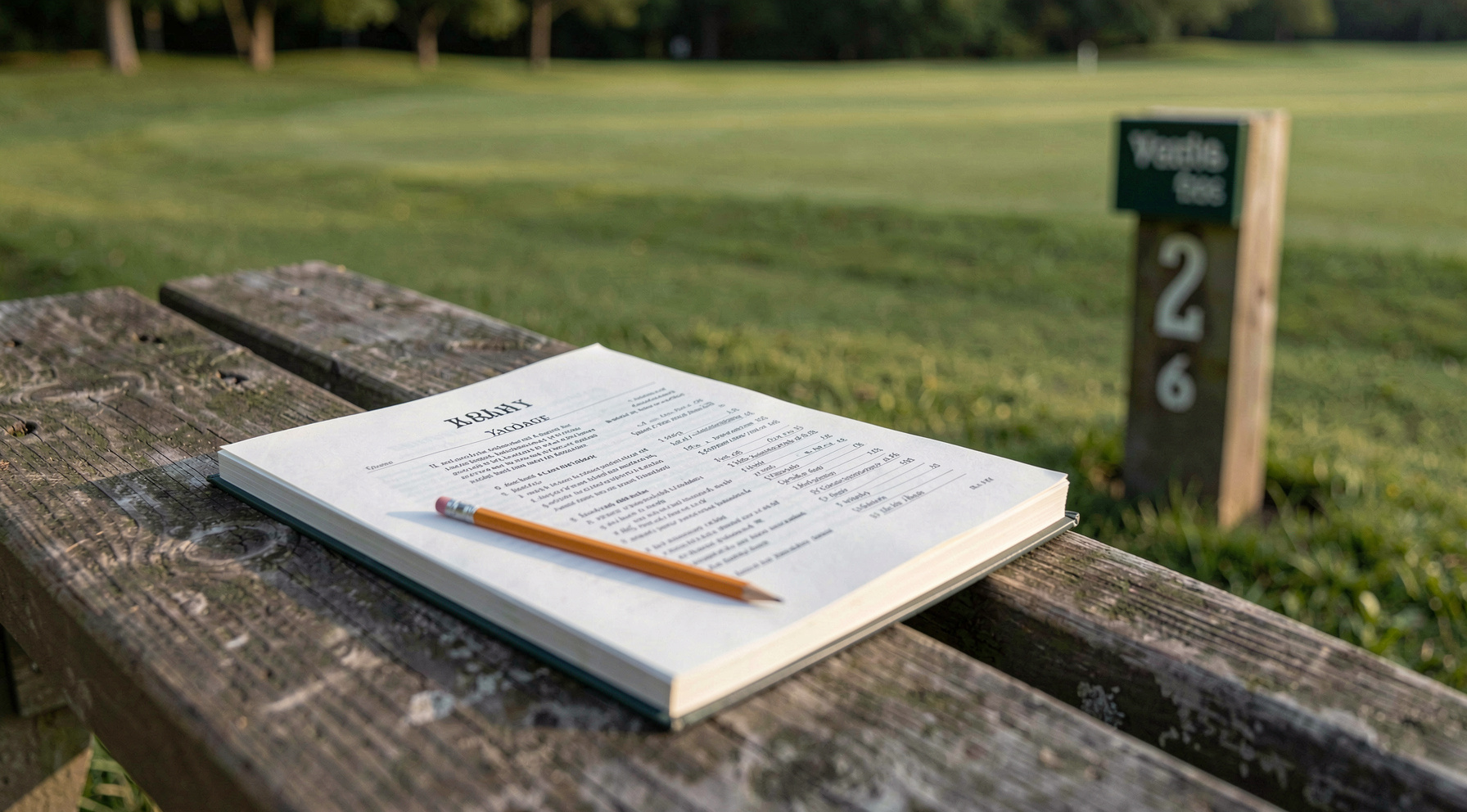
A public 18-hole course guide works best when it starts with the shot that costs you the most strokes, not with the swing tip you enjoy practising. The official guide for Hail Ridge Golf Course is built that way: one question per chapter, the mechanism first, then the numbers that describe it, then what to do about it on a Saturday morning. Before you read it in order, spend one round writing down where the damage happens.
What does the official Hail Ridge Golf Course guide cover?
The guide covers the game in numbered sections, and the contents list on the left follows you down the page. Each chapter answers one question in the same shape: the mechanism first, then the numbers that describe it, then what to do about it on a Saturday morning. Every section ends with a short block that repeats the three things worth carrying to the course. That block is the part worth remembering.
Golf writing has a habit of mixing two very different things: what is measurable (a ball starts close to where the face points, a slope rating of 113 is the standard) and what is opinion (which grip is best). This guide keeps them apart. Where a figure comes from published data, it says so. Where a number is a rule of thumb from teaching practice, it says that too, because the two behave very differently when your own results disagree with them. Measured facts and teaching rules of thumb are labelled differently on purpose.
If you want the full structure before you play, the official guide for Hail Ridge Golf Course lays out every chapter and its contents list. The link sits in the first third of this article because the guide is the reference, not a shortcut.
Why start with the shot that costs you most?
Most golfers practise what they enjoy and lose strokes somewhere else entirely. Before reading in order, spend one round writing down where the damage happens: penalty strokes, three-putts, thin chips, or tee shots that leave no shot at the green. Then start with the matching chapter.
The instruction is simple: write down where strokes are lost for one round before choosing what to practise. A player who enjoys hitting driver may spend an hour on the range and still lose four strokes to three-putts. The guide does not tell you which shot to fix. It tells you how to find out.
How does the guide separate facts from opinions?
The guide uses two labels. One label marks a measured fact, such as the starting direction of a ball or a standard slope rating. The other label marks a teaching rule of thumb, such as a common grip recommendation. The two behave very differently when your own results disagree with them.
A measured fact stays true whether you believe it or not. A teaching rule of thumb is a starting point that may not fit your body, your course, or your miss. The guide says which is which so you can decide what to keep and what to test.
What is the mechanism first approach?
Each chapter opens with the mechanism: the physical or strategic reason a shot behaves the way it does. Only after that does the chapter give numbers. Only after the numbers does it give practice.
This order matters because a number without a mechanism is just a slogan. If you know why a ball curves, you can read your own ball flight and adjust. If you only know a number, you are guessing.
What do the short blocks at the end of each section do?
Each section ends with a short block that repeats the three things worth carrying to the course. The block is not a summary of everything in the chapter. It is a filter. It removes the detail you can look up later and keeps the three items you can use on the next tee.
A player who reads the whole guide and remembers nothing else can still use those blocks. They are written to be read in the car park, not in an armchair.
How should a Saturday morning player use this guide?
Start with one round of note taking. Write down penalty strokes, three-putts, thin chips, and tee shots that leave no shot at the green. Count them. Then open the chapter that matches the largest number.
Read the mechanism. Read the numbers. Read the practice. Take the three items from the block at the foot of the section. Leave the rest for the next round. The guide is built to be used in pieces, not swallowed whole.
Does the guide replace a lesson?
No. The guide separates measured facts from teaching rules of thumb, but it does not watch your swing. A teaching professional can see what you cannot feel. The guide gives you the vocabulary to ask better questions and the structure to practise with purpose between lessons.
A player who arrives at a lesson with a written list of lost strokes and a chapter in mind will get more from the hour than a player who arrives with a general complaint.
What is the one thing to remember?
One question per chapter. Mechanism first, then numbers, then practice. Measured facts and teaching rules of thumb are labelled differently on purpose. The block at the foot of each section is the part worth remembering.
If you forget everything else, write down where your strokes go for one round. That single page of notes will tell you which chapter to read first.